The SHIFT Leadership Framework™ · SHIFT Into Legacy™
The SHIFT Leadership Framework™

Leadership development with an architecture, not an agenda.

Most leadership development delivers information and hopes it becomes change. The SHIFT Leadership Framework™ develops the leader first, then the leadership: one integrated methodology, four movements, applied to every engagement from a single executive to an enterprise program.

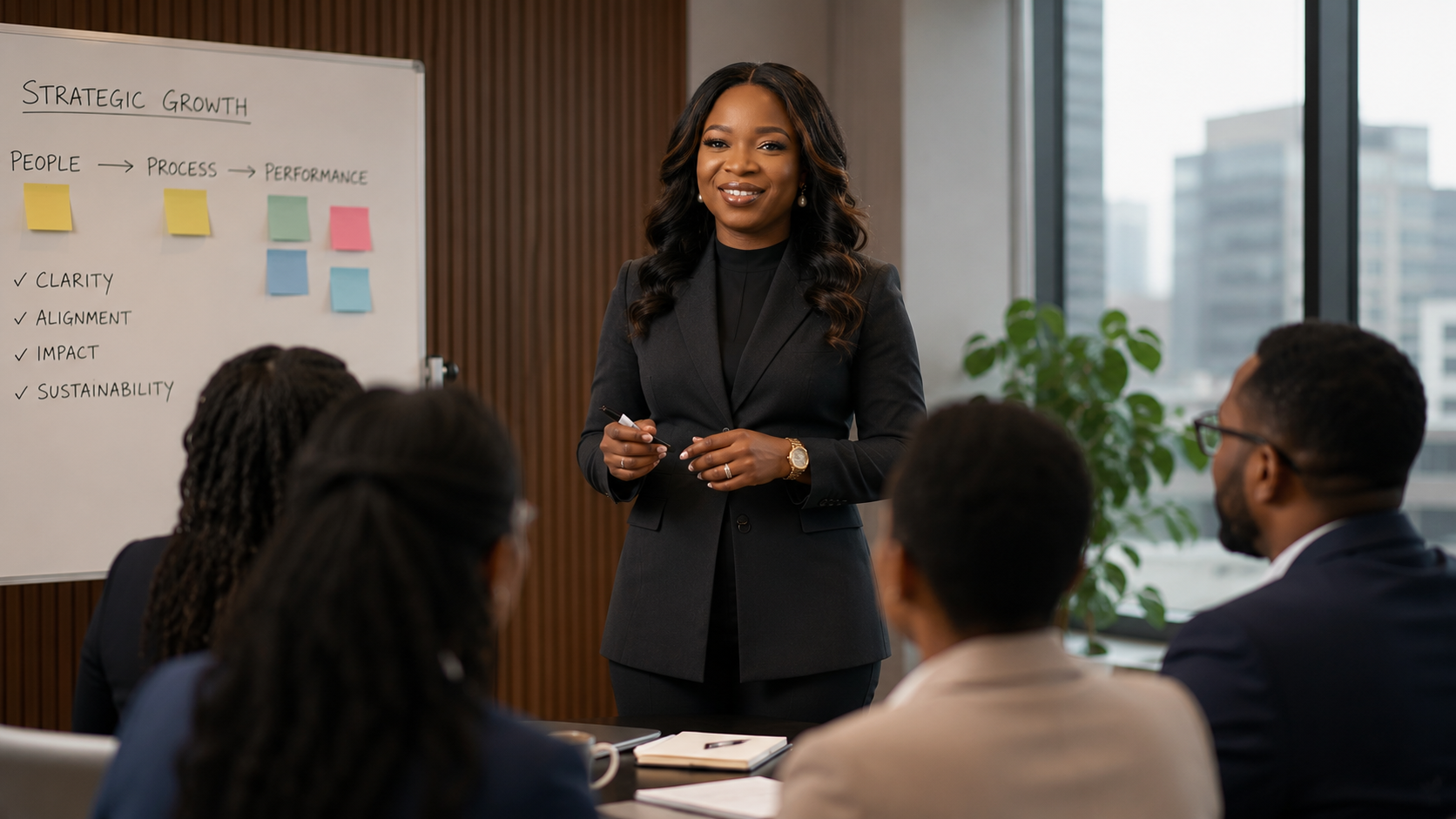
Leaders working through a strategic framework session
Clarity · Capacity · Culture · Legacy
Movement OneClarity
Movement TwoCapacity
Movement ThreeCulture
Movement FourLegacy
Why a Framework

Training ends on Friday. Development has to hold on Monday.

Organizations have seen the pattern: an inspiring workshop, a spike of energy, and within a quarter the same meetings, the same conflicts, the same exhaustion. The content was fine. The architecture was missing. A framework gives development a sequence, a common language across the organization, and a way to measure whether anything actually changed.

"We do more than teach leadership. We develop leaders through an integrated framework, because a leader who is developed carries the teaching long after the trainer has gone home."

Oluseye Ashiru · Founder

The Four Movements

Each movement builds what the next one stands on.

01Movement One

ClarityKnow what you are leading, and from where.

Leaders drift when direction is assumed rather than named. The first movement establishes precise clarity: who this leader is beneath the role, what the organization is actually asking of them, and where the real gaps sit. Diagnosis before development, always, because a program aimed at the wrong problem produces polished leaders with the same results.

  • What is actually blocking this leader or this team?
  • What does the organization need them to become?
  • What are we measuring, and what will have changed?

02Movement Two

CapacityBuild the leader who can carry it.

Clarity without capacity produces frustrated leaders who can see the destination and cannot reach it. The second movement builds the internal and practical capacity to lead at the required level: resilience, emotional intelligence, decision-making, communication, and the sustainable rhythms that prevent the burnout cycle. This is where our clinical depth does work most firms cannot.

  • Can this leader sustain the level the role demands?
  • What happens to their leadership under pressure?
  • Where does capability end and exhaustion begin?
03Movement Three

CultureMake it how the organization behaves.

A developed leader inside an unchanged culture reverts within a quarter. The third movement moves development from the individual to the system: trust, psychological safety, communication patterns, conflict, and collaboration across teams. Culture is what leaders repeatedly do, so we work on what is repeatedly done, until the healthier pattern is the normal one.

  • Do our teams say what needs to be said, to the right person?
  • What does this culture quietly cost our best people?
  • Which leadership behaviours will we make normal here?
04Movement Four

LegacyBuild leadership that outlasts the leader.

The final movement makes the change transmissible: succession pipelines, multiplied leadership, executive presence in the next generation, and systems that hold when key people move on. Development that depends on one person is a risk on two legs. We build organizations that keep producing leaders after the engagement ends, which is the only outcome that compounds.

  • Who is ready to lead next, and who is preparing them?
  • What walks out the door when your best leader does?
  • What will still be working here in five years?
The Framework at Work

One architecture. Every engagement.

In executive coaching

A single leader moves through all four movements across the engagement: clarity on what is actually blocking them, capacity to lead at the next level, the behaviours that shift their team's culture, and a leadership legacy plan for what they hand forward.

In leadership development programs

Cohorts progress through the movements together, building a shared language across the leadership layer. When forty managers all know what Clarity and Capacity mean in practice, the organization starts having different conversations.

In team effectiveness work

Intact teams enter primarily at Culture: trust, communication, and conflict, with Clarity work establishing what this team exists to produce and Capacity work strengthening the leaders inside it.

In organizational wellbeing

Burnout and resilience engagements lead with Capacity, then move deliberately into Culture, because individual recovery inside an unchanged system does not hold. This sequencing is exactly why our wellbeing work produces durable results.

In strategic consulting

At the organizational level, the framework becomes the audit and the roadmap: where the enterprise has clarity debt, capacity risk, culture cost, and succession exposure, and in what order to address them.

A depth-oriented leadership development conversation
Human-centred, evidence-informed
Why It Holds

Built at a rare intersection.

The framework was developed by a founder who reads a balance sheet and a nervous system with equal fluency. That combination shows in the design: commercially grounded, psychologically deep, and measured like the business initiative it is.

  • Commercially grounded · shaped by an MBA and actuarial training, so development ties to business outcomes, not sentiment
  • Clinically informed · built on evidence-based psychological frameworks by a Registered Therapeutic Counsellor in active practice
  • Field-tested · refined across 12+ years of developing leaders on five continents
  • Measured · every engagement defines its success criteria in Movement One and reports against them at close
See It Applied to Your Organization

Where is your organization on the continuum?

In one discovery call we will map your leadership challenge against the four movements and tell you plainly where the work begins.

Book a Discovery Call hello@shiftintolegacy.com